
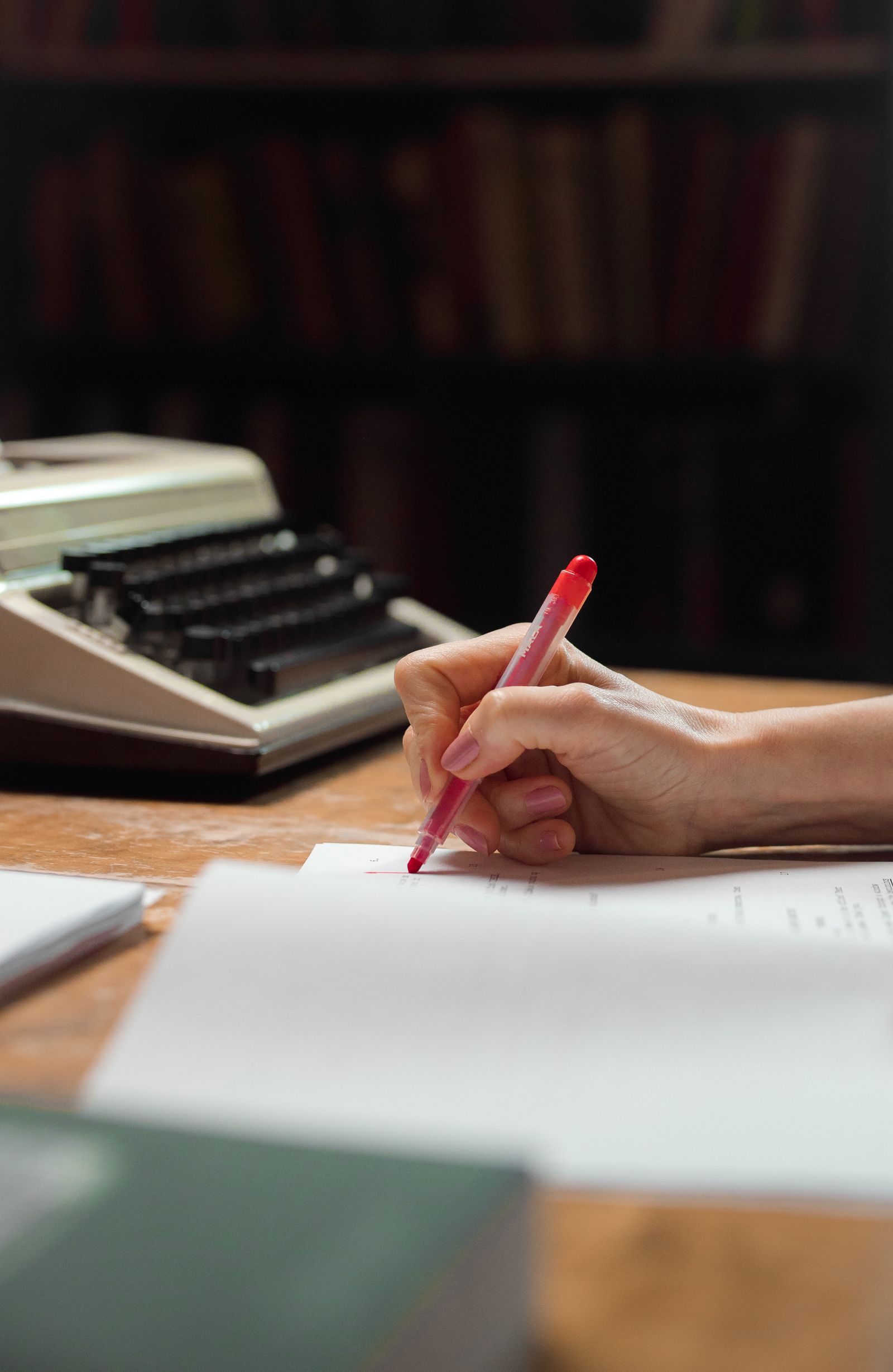
Every rough draft needs an editor, and the editor is you. That sounds obvious until you watch what most writing tools do: they hand you pages and call them finished. Rough Draft Maker does the opposite. It hands you a draft and waits. The next move is yours. That is not a missing feature. That is the product.
What is a rough draft for?
A rough draft is not a script. It is the thing you cut a script from. It is the full story, on the page, in the wrong order, with scenes that do not land and dialogue that needs a second pass. That is what a first version is supposed to be. Anyone who tells you a first version should be clean has never finished one.
The tool knows this. It calls itself a rough draft maker, not a screenplay writer, because the draft is the starting point, not the product. The product is what you do with it. A rough draft is a full first version, and it is never meant to shop around.
What does the tool do, and what does it not do?
It does three things. First the take: it reads your idea and shows you how it sees the story framed. Then the blueprint: the whole story, scene by scene, laid out for your approval. Then the draft: the full rough draft, 90 to 110 pages, built from the blueprint you approved.
What it does not do is decide. It does not pick the ending. It does not cut the scene you love that does not work. It does not tell you the middle is fine when it is not. Those are editorial calls, and they belong to a human. The tool’s brain has opinions. It was built by a screenwriter, Matt Allen, Writers Guild member since 2001, with credits on Four Christmases, Soul Surfer, and Nine Lives, and his craft is in it: 25 years, 13 editorial points, 32 governing rules. But the final call is the writer’s. The brain does the storytelling. The AI does the typing. You do the editing.
Why is the human the point?
Because a script is a set of choices, and choices are the writer’s job. Cut this scene or keep it. Move the reveal earlier or later. Give the line to the other character. No tool can make those calls for you, and a tool that pretends it can is selling you a finished script that is not finished. The honest tool gives you a draft and gets out of the way.
That is why the feedback matters more than the draft. The draft is the raw material. Your eye is the craft. Read it, mark it up, argue with it, rewrite the parts that do not earn their place. The writer who edits their own draft is doing the real work of screenwriting. The tool just made sure there was a draft to edit.
What does it cost?
One pass is $97, or $48.50 with the code WRITE101. Launch pricing — half price while the launch offer runs. One time. No subscription. One idea in, one rough draft out, and the writer keeps the pen from there. Get the pass here.
FAQ
Is the rough draft a finished screenplay?
No. It is a full first version, 90 to 110 pages, built from a blueprint you approved. It is never meant to shop around. You finish it.
Does the AI write the ending?
It drafts one, from your blueprint. You decide whether it is the right ending. The final call is yours, and so is the rewrite.
Who is Matt Allen?
A screenwriter, Writers Guild member since 2001, with credits on Four Christmases, Soul Surfer, and Nine Lives. He built the tool’s brain with Steve Smythe, who built the software system.
What does the pass cost?
$97 for a one-time pass, or $48.50 with the code WRITE101. No subscription.
ABOUT AI GLOBAL ENTERTAINMENT
AI Global Entertainment makes films and builds tools for storytellers, and runs the Buzz Daily family of publications.