Craft, business, and AI for writers


Category: Writing Life

  • A Week Left to Win a Free Feature Rough Draft From Matt Allen

    A Week Left to Win a Free Feature Rough Draft From Matt Allen

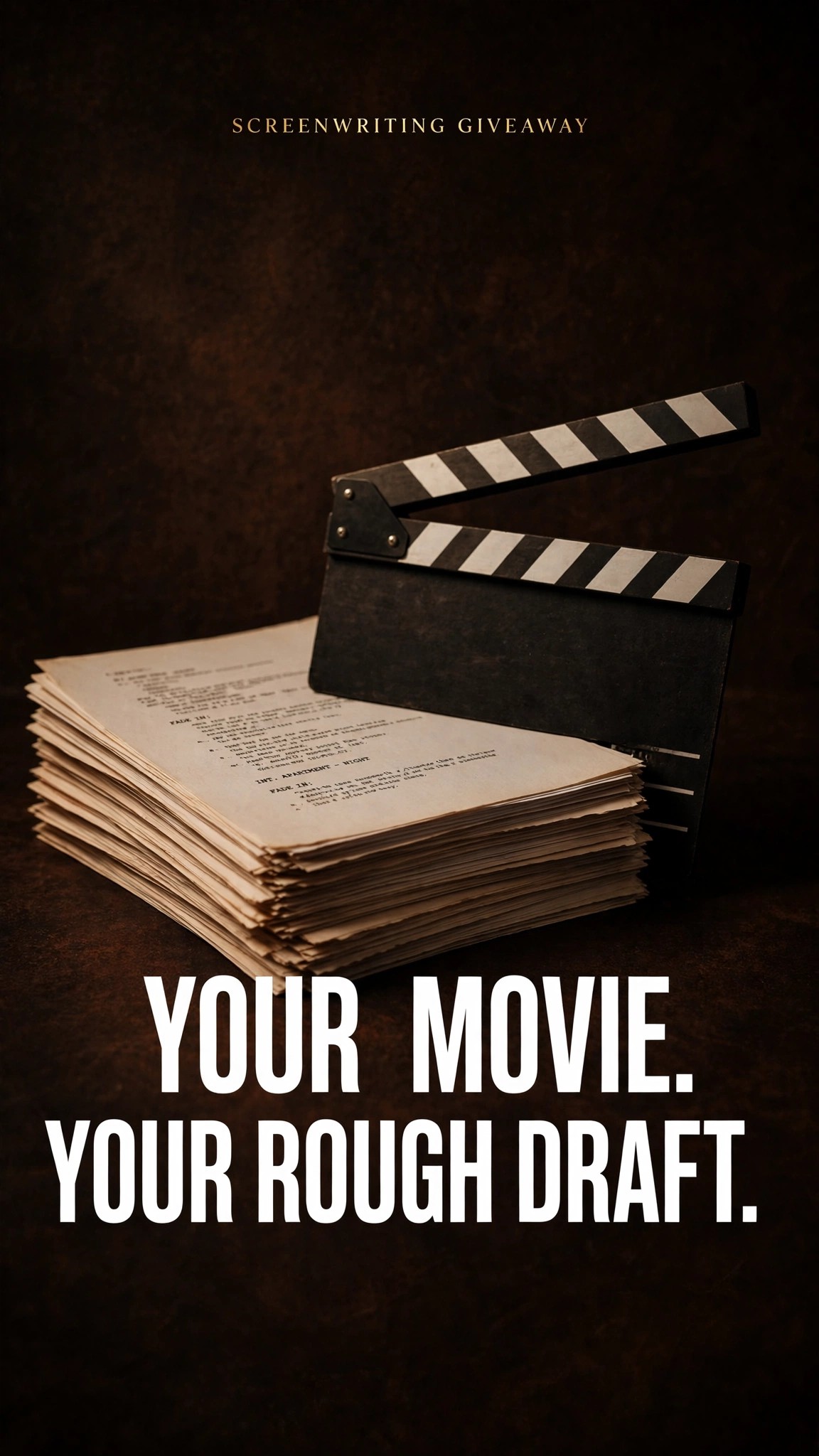
    One week left. WGA screenwriter Matt Allen — co-writer of Four Christmases — is giving away a free feature screenplay rough draft. Pitch your movie in the comments on his LinkedIn, Instagram, or Facebook post, and he’ll pick his favorite. The winner gets a full feature-length rough draft of their idea, with all rights. Entries close Sunday, Nov 29; the winner is announced Monday, Nov 30. Everyone who enters can use code WRITE101 for 50% off a Rough Draft Maker Story Pass ($48.50, reg. $97). Launch pricing — half price while the launch offer runs. Get the pass here.

    A week is plenty of time to write one paragraph. The movie you have been carrying around, the one you describe at dinner parties, the one that will not leave you alone. Put it in the comments. Matt reads every pitch himself.

    The full giveaway announcement, with the details. One paragraph. One week. One winner.

    FAQ

    How do I enter?
    Pitch your movie in the comments on Matt Allen’s LinkedIn, Instagram, or Facebook giveaway post. One paragraph is all it takes. He picks his favorite.

    What does the winner get?
    A full feature-length rough draft of your idea, built with Rough Draft Maker, with all rights. And everyone who enters can use code WRITE101 for 50% off a Story Pass ($48.50, reg. $97).

    When does it end?
    Entries close Sunday, Nov 29. The winner is announced Monday, Nov 30.

    About AI Global Entertainment

    AI Global Entertainment builds tools and media for writers, storytellers, and creators.

  • Make a Christmas List for Your Story: The Take Comes First

    Make a Christmas List for Your Story: The Take Comes First

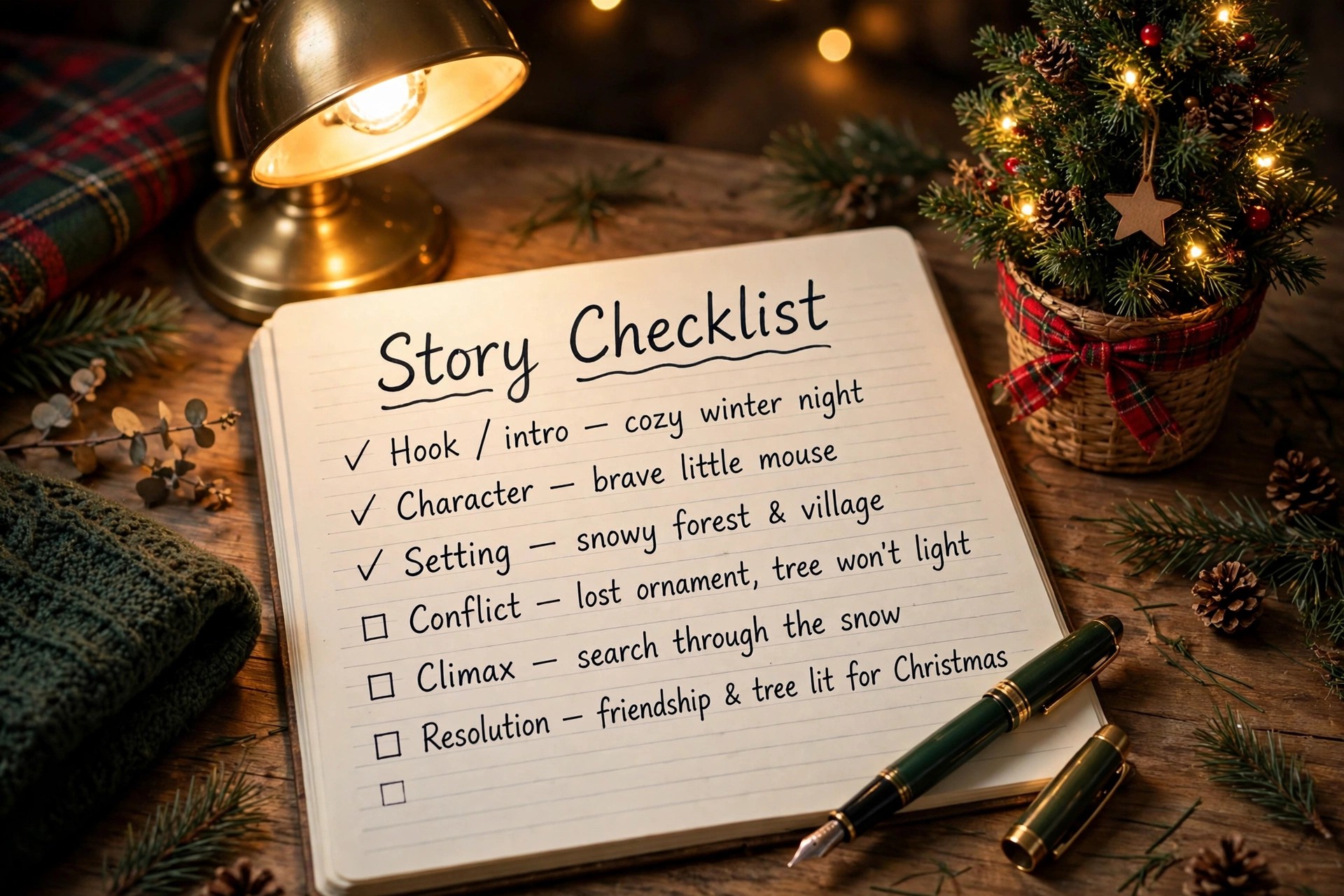
    Every December the same list appears on the fridge. Names, gift ideas, prices, check marks. Nobody writes a story that way, but maybe they should. Before you buy a single gift for the writer in your life, or sit down to write the story you have been carrying since summer, make the list that matters: what the story wants, what it needs, and what the take has to prove first.

    A take is the shaping pass. It tests your raw idea against the craft before a single scene is written. Does it have a hero worth following? Does it have a problem big enough to carry 90 pages? Does the ending earn the beginning? The take answers those questions early, while they are still cheap to fix.

    What goes on the list first?

    The want. Not the plot, not the twist, not the clever opening line. The want. A character who wants something clear, who has to choose, who pays a price for that choice, will pull a story forward even when the plot takes a strange turn. Everything else on the list serves that one line.

    Most stalled stories are not missing talent. They are missing a want strong enough to carry the middle. Writers blame themselves when the story runs out of road around page 40, but the road was never built. The list was never made. A take builds it before you spend weeks writing scenes that lead nowhere.

    How does a take test the list?

    It runs your idea through the checks a working screenwriter runs on every scene. Matt Allen spent 25 years in the Writers Guild of America learning those checks: 13 editorial points and 32 governing rules, the craft behind Four Christmases and Soul Surfer. The take reads your idea and shows you where it holds and where it sags, while the fix still costs an afternoon instead of a month.

    If you had the time, this is the holiday movie you would write. The take is how you find the time: it tells you which scenes earn their place before you write them.

    What happens when the take says no?

    You fix the idea, and you fix it early. That is the whole point. A take that says no is not a verdict on your talent. It is a carpenter checking the joints before the chair is built. Maybe the hero needs a sharper want. Maybe the problem needs to be bigger. Maybe the ending needs to be earned instead of announced. Each fix at the take stage costs minutes. The same fix at page 70 costs a week.

    Once the take holds, the blueprint maps every scene, and the draft follows: a full rough draft, 90 to 110 pages, built from your idea through the take and the blueprint. It is a first version, and it is honest about that. It is the pages you finish, the version you revise into the script only you could write. The brain behind it is Narristotle, Matt’s WGA craft plus Steve Smythe’s software system. The brain does the storytelling. The AI does the typing.

    Make the list before you buy the gifts. One pass is $97, or $48.50 with the code WRITE101. Launch pricing — half price while the launch offer runs. Get the pass here.

    FAQ

    Is Rough Draft Maker an AI writing my script for me?
    No. Narristotle is Matt Allen’s WGA craft, 25 years of it, plus Steve Smythe’s software system. The brain does the storytelling. The AI does the typing. You bring the idea, and you finish the draft.

    What is a take?
    A take is the shaping pass before any scene is written. It tests your idea against the craft: hero, problem, ending. If the idea holds, it goes into the blueprint. If it does not, you fix it while it is still cheap.

    How long is the finished draft?
    A full rough draft runs 90 to 110 pages. It is a first version, built from your idea through the take and the blueprint, and it is yours to revise into the script you want to show.

    What does a pass cost?
    One pass is $97, or $48.50 with the code WRITE101. Creating your account costs nothing.

    About AI Global Entertainment

    AI Global Entertainment builds tools and media for writers, storytellers, and creators.
  • The Silver Screen Starts With a Finished Draft

    The Silver Screen Starts With a Finished Draft

    Almost every writer has the same daydream. A dark theater, a title on the screen, your name in the credits while the audience leans in. It is a good daydream. Hold onto it. But here is the part the daydream leaves out. Nobody gets into the room on a daydream. They get in on pages. A producer can read pages. An agent can pass pages along. A director can see a film in pages. A dream cannot be read, forwarded, or shot. It can only be felt, and feelings do not open doors. What opens doors is a finished draft, the thing you can send on a Tuesday and talk about on a Thursday. The dream is the fuel. The draft is the ticket.

    Why do dreams stall before the first page?

    Dreams stall because they are big and the first page is small. A writer pictures the premiere, then looks at a blank document, and the gap between the two feels impossible to cross. So the idea stays in a notebook, or in a notes app, or in conversations with friends who say you should really write that. Months pass. The idea gets a little dimmer, not because it was weak, but because it never got pages. The blank page wins that fight every time it is the only opponent. The fix is not a bigger dream. It is a smaller first move: get the idea out of your head and into a shape you can look at. Take it in, see the blueprint, approve the shape, and let the draft follow. A dream with pages behind it stops being a wish. It starts being a project, and projects get finished.

    What does a finished draft change?

    A finished draft changes the conversation completely. Before it exists, you are a person with an idea, and ideas are easy to praise and easy to forget. After it exists, you are a writer with a script, and a script can be read, discussed, and passed on. You can ask a friend to read forty pages and tell you the truth. You can send it to a contact and follow up the next week. You can look at the ending yourself and decide it needs a harder choice. None of that is possible with a daydream. A draft of ninety to one hundred ten pages is a full first version, built from a blueprint you approved, and it gives you something solid to rewrite. The writer finishes it, shapes it, and makes it theirs. That is how a draft becomes a calling card instead of a file that never leaves the laptop.

    Who built the tool behind the draft?

    The tool was built by people who know both sides of the room. Matt Allen has been a WGA screenwriter since 2001. He co-wrote Four Christmases and Soul Surfer, and his other credits include Nine Lives, Mighty Oak, and Block Party. His craft is the brain of Rough Draft Maker: more than twenty five years of practice, thirteen editorial points, thirty two governing rules. Steve Smythe built the software system around that craft, so the storytelling comes from a working writer and the typing comes from the machine. The brain does the storytelling. The AI does the typing. More than twenty professional WGA screenwriters have tested it, which is the kind of check that matters when the goal is a draft someone else will actually read. Your name goes on the draft. The craft behind it has already done the hard miles.

    Stop carrying the dream around unwritten. One pass is $97, or $48.50 with the code WRITE101. Launch pricing — half price while the launch offer runs. Get the pass here.

    FAQ

    I have the idea but no draft. Where do I start?

    Start by taking your idea in. You get a blueprint back, a scene by scene map of the whole story, and you approve it before any draft pages are written. That first step turns a daydream into a plan.

    How long is the draft I end up with?

    Ninety to one hundred ten pages. It is a full first version of your feature screenplay, built from the blueprint you approved, and you finish it yourself.

    Who is behind Rough Draft Maker?

    Matt Allen, a WGA screenwriter since 2001 who co-wrote Four Christmases and Soul Surfer, provides the craft: more than twenty five years of practice, thirteen editorial points, thirty two governing rules. Steve built the software system around it. The brain does the storytelling, and the AI does the typing.

    Can I send the draft straight to producers?

    No. It is a first version, never meant to shop around as is. You finish it, shape it, and make it yours first. The draft is what gets you into the conversation, and your finish is what carries it.

    About AI Global Entertainment

    AI Global Entertainment builds tools and media for writers, storytellers, and creators.
  • One Idea In, Ninety Pages Out

    One Idea In, Ninety Pages Out

    Every writing tool makes a promise. Few of them hand you proof you can hold. A course promises a method. A template promises a format. A blank page promises nothing at all. Rough Draft Maker promises something simpler, and you can measure it. One idea in, one rough draft out. Ninety to one hundred ten pages, built from a blueprint the writer approved first. That is the whole pitch, and it fits in one sentence, because the result is the pitch. Pages you can read. Scenes you can cut, keep, or rewrite. A draft with your name on it, not a lesson about someday writing one.

    What do 90 to 110 pages actually prove?

    Page count on its own proves nothing. Any tool can spit out a hundred pages of filler, and any writer has read scripts that felt long at page thirty. The number matters because of what sits behind it. Ninety to one hundred ten pages means a complete story shape: a beginning that sets the want, a middle that tests it hard, and an ending that pays it off. It means the scenes add up to a feature, not a sketch that runs out of steam. It means the writer can sit down, read the draft end to end, and see where it sings and where it sags. That is what a first version is for. It is not a polished script. It is not a shopping draft. It is a full draft the writer can finish, and finishing starts with having all the pages in front of you.

    How do three steps get you there?

    The path is short on purpose. Take, Blueprint, Draft. First, you take your idea in: the story, the characters, the world, the tone you want. Second, you get a blueprint back, a scene by scene map of the whole film, and you approve it before anything else happens. If a turn lands wrong, you fix it here, while it costs nothing but a thought. Third, the draft gets written from that approved map, scene by scene, until the pages add up to a full rough draft. Three steps, no maze, no extra homework. The blueprint is the step most tools skip, and skipping it is why so many drafts stall halfway. When the map is approved, the writing has somewhere to go, and the writer always knows what the next scene has to do.

    Why should a writer trust the proof?

    Trust comes from people who do the job for a living. The brain inside Rough Draft Maker is Matt Allen’s: a WGA screenwriter since 2001 who co-wrote Four Christmases and Soul Surfer, with Nine Lives, Mighty Oak, and Block Party among his credits. Twenty-five-plus years of working practice, thirteen editorial points, thirty-two governing rules. That is the part that shapes the story. The software does the typing. More than twenty professional WGA screenwriters have tested the tool, and working writers are a tough crowd. They read for shape, pace, and truth, and they say so when a draft wanders. Randy O. put it plainly: “This is amazing. What a great piece of software.” The proof is not a claim on a sales page. It is pages, built on craft, read by writers who know the difference.

    Put your idea to the test. One pass is $97, or $48.50 with the code WRITE101. Launch pricing — half price while the launch offer runs. Get the pass here.

    FAQ

    How long is the rough draft?

    Ninety to one hundred ten pages. It is a full rough draft of your feature screenplay, built from a blueprint you approved first, not a sample or an outline.

    What are the three steps?

    Take, Blueprint, Draft. You take your idea in, you get a blueprint back and approve it, and then the draft is written from that approved map, scene by scene.

    Do I keep control of the story?

    Yes. You approve the blueprint before any draft pages are written, and you finish the draft yourself. It is your story, your name on it, and your calls all the way through.

    What does the pass cost?

    A pass costs $97 one time, or $48.50 with code WRITE101. Creating an account is free.

    About AI Global Entertainment

    AI Global Entertainment builds tools and media for writers, storytellers, and creators.
  • A Screenplay Is a Craft, Not a Mystery

    A Screenplay Is a Craft, Not a Mystery

    Most people who have never written a screenplay picture the same thing. A lone writer, staring at a blank page, waiting for genius to show up. It looks like magic from the outside, and magic is a bad place to start. You cannot practice magic. You cannot fix magic when it stalls on page forty. A screenplay is not magic. It is a craft, and a craft has a shape. Scenes follow scenes. Choices turn the story. A reader can feel when the shape holds and when it sags. That is good news. Shape can be learned, checked, and approved before a single page of dialogue gets written.

    What does a screenplay actually look like under the hood?

    A finished screenplay is a stack of scenes, and each scene does a job. Somebody wants something. Something stands in the way. The scene ends with the story in a different place than where it started. That is the whole trick, repeated ninety times or so, with the pressure rising as the pages add up. The opening sets the world and the want. The middle tests it, twists it, and takes things away. The end pays it off or refuses to, on purpose. None of that needs a muse. It needs a writer who can see the shape and say yes to it or no to it. When the shape is wrong, no amount of clever dialogue saves it. When the shape is right, even plain dialogue carries weight, because the reader knows what is at stake in every scene.

    Why approve a blueprint before writing a page?

    Here is where most first drafts go sideways. The writer starts typing on page one with a strong opening and a vague middle, then hits page fifty and stalls. The story had no spine, so the pages had nowhere to go. A blueprint fixes that before the typing starts. It maps the scenes, the turns, and the ending, so the writer can look at the whole story at once and fix the soft spots while they are still cheap to fix. Approve the shape first, and the draft has a job to do on every page. Change your mind later, and you change it on purpose, not by accident. Rough Draft Maker works this way on purpose. You take your idea in, you get a blueprint back, and you approve it before a draft is written. The tool works the way a working screenwriter works, because its brain is one. Matt Allen has written this way for more than twenty five years, and his craft sits inside the tool: thirteen editorial points and thirty two governing rules, guiding every scene.

    What makes this different from typing into a chatbot?

    A chatbot will give you pages. It will give you pages fast, and the pages will read smooth, and the story will still wander, because nothing underneath is holding it to a shape. The brain does the storytelling. The AI does the typing. That distinction matters, because it draws the line in the right place. The craft calls the shots: what each scene must do, where the turn lands, how the pressure builds. The typing follows the plan instead of inventing one as it goes. That is why the tool was tested by more than twenty professional WGA screenwriters, not just tried once by a friendly crowd. Working writers can spot a wandering middle in ten pages. They kept going because the shape held. A draft built this way is still a first version, and the writer still finishes it. That is the point. The draft gives you something real to rewrite, instead of a blank page that asks you to be brilliant from nothing.

    Your idea already has a shape in it. One pass is $97, or $48.50 with the code WRITE101. Launch pricing — half price while the launch offer runs. Get the pass here.

    FAQ

    Do I need screenwriting experience to use Rough Draft Maker?

    No. You bring the idea, and the tool walks you through Take, Blueprint, Draft. You approve the blueprint before any draft pages are written, so you stay in charge of the story at every step.

    What is the blueprint, exactly?

    It is a scene by scene map of your whole story, with the turns and the ending laid out before the writing starts. You read it, fix what feels wrong, and approve it. Only then does the draft get written from that map.

    Who is Matt Allen?

    Matt Allen is a WGA screenwriter since 2001. He co-wrote Four Christmases, which reached number one at the box office, and Soul Surfer. His credits also include Nine Lives, Mighty Oak, and Block Party. His craft, more than twenty five years of it, with thirteen editorial points and thirty two governing rules, is the brain inside Rough Draft Maker.

    Is the draft ready to send to producers?

    No, and it is not meant to be. It is a full first version, ninety to one hundred ten pages, and the writer finishes it. The draft gives you something real to rewrite, instead of a blank page.

    About AI Global Entertainment

    AI Global Entertainment builds tools and media for writers, storytellers, and creators.
  • Nobody Buys an Idea. They Buy a Script.

    Nobody Buys an Idea. They Buy a Script.

    Ask any writer what they’re working on and you’ll hear the same answer: I have this idea. Ideas are free. Everyone has one, and nobody in the industry pays for one. What the industry buys is a script. Pages a reader can read, a manager can pass along, a producer can hold in their hands and picture on a screen. Until you have those pages, the idea is just a conversation at a party. The moment you have them, everything changes. A finished first draft is the asset, and everything else in a writing career follows from it.

    Why won’t anyone buy an idea?

    An idea can’t be read. It can’t be judged, cast, budgeted, or scheduled. A producer who loves your pitch still has to answer one question before anything moves: where are the pages? Without them, there’s nothing to option, nothing to develop, nothing to show the next person up the chain. That’s not the industry being cold. It’s the industry being practical. An idea is a promise. A script is proof the promise can be kept. Writers who spend years polishing a pitch and never writing the pages are polishing the wrong thing. The pitch opens a door. The pages walk through it.

    What changes the day you have a finished draft?

    Everything, starting with how you talk about the work. “I have an idea” becomes “I have a script.” That’s a different sentence in every room that matters. A reader can give notes on a script. A manager can send a script to a contact. A producer can read a script on a flight and call you Monday. None of that happens with an idea, because there’s nothing to send, nothing to read, nothing to react to. A finished first draft also changes how you see yourself. You stop being someone who wants to write and start being someone who has written. That’s not a small shift. It’s the line between dreaming about a career and having the asset a career is built on.

    Is a rough draft really enough?

    Yes, because a rough draft is a beginning, not a finish line. Nobody expects a first version to be the shooting script. What it does is give you something real to work with: pages you can revise, scenes you can cut, dialogue you can sharpen. The draft is the clay. Without it, you’re shaping air. Rough Draft Maker delivers a full rough draft, 90 to 110 pages, built from your idea through the take and the blueprint, using Matt Allen’s WGA craft. Matt co-wrote Four Christmases and Soul Surfer, and his craft, 13 editorial points and 32 governing rules, is the brain of the tool. The draft it produces is yours to finish. That’s the deal, and it’s the honest one: the tool gets you the pages, and you make them great.

    What is stopping you from having pages?

    Usually the blank page, and the months it eats. Writers don’t lack ideas. They lack a way through the middle, a structure that carries the story from a strong opening to an ending that earns it. That’s what the craft is for, and that’s what the tool puts to work: the take shapes the idea, the blueprint maps the scenes, the draft follows. You don’t need permission from the industry to start. You need pages. And pages start with a first version that exists, not a perfect one that doesn’t. Get the draft done, then get to work making it yours.

    The pages are the asset. One pass is $97, or $48.50 with the code WRITE101. Launch pricing — half price while the launch offer runs. Get the pass here: Get the pass here.

    FAQ

    What do I get for the pass?

    A full rough draft of your idea, 90 to 110 pages, built through the take and the blueprint. It is a first version, and you finish it into the script you want to show the world.

    Do I need to be a professional screenwriter?

    No. You need an idea and the willingness to shape it. Creating an account is free, and the tool walks your idea through the craft in order.

    Is the draft mine to keep and revise?

    Yes. The pages are yours. The draft is a first version, and the revision is where you make it your own. Rough Draft Maker gets you the pages. You make them great.

    How much does a pass cost?

    One pass is $97, or $48.50 with the code WRITE101. Creating your account costs nothing.

    About AI Global Entertainment

    AI Global Entertainment builds tools and media for writers, storytellers, and creators.
  • The Vomit Draft Is the Part AI Should Do

    The Vomit Draft Is the Part AI Should Do

    Matt Allen has a name for the first draft. He calls it the vomit draft. Every screenwriter knows the part he means: you have the idea, you love the idea, and then, in Matt’s words, ‘you have to write the damn thing,’ ‘scene after scene, page after page,’ until a hundred pages exist. It takes weeks or months, it is exhausting, and when you finally type FADE OUT, the script probably is not very good yet. That is the miserable middle of writing, and Matt’s argument, in a new piece on Medium, is simple: let AI do that part. Keep the creative part for yourself. Read Matt’s piece here.

    What is the miserable part, exactly?

    Matt breaks writing a movie into three parts. The first part is fun: the idea, the characters, the world, the scenes you can already see. The second part is the vomit draft: the long grind of getting a first full version onto the page. The third part is fun again: rewriting. That is where you fix the structure, sharpen the dialogue, deepen the characters, and make the movie better. His line is one every working writer knows by heart. Writing is rewriting. The problem is that you cannot rewrite until something exists to rewrite, and getting that something to exist is the part that eats months.

    Why does the argument hold up?

    Because Matt is not guessing about the craft. He is a Writers Guild member since 2001, with credits on Four Christmases, Soul Surfer, and Nine Lives. He built the tool’s brain, Narristotle, on his own craft: 13 editorial points and 32 governing rules. The brain does the storytelling. The AI does the typing. And his piece puts the idea in a longer Hollywood tradition. George Miller compared AI to the invention of photography: photography did not kill painting, it changed what painters could do. James Cameron has spent a career using new technology to put impossible images on screen. The Russo brothers argued that making content 10 percent better may be a more interesting opportunity than making it 50 percent cheaper. The artist drives. The technology helps.

    Hollywood has been saying the same thing. AI didn’t kill the screenwriter: it gave them a first draft.

    How does this map onto the tool?

    Here is the part Matt’s piece does not spell out, and it is the reason the argument is not just theory. His three parts map exactly onto how Rough Draft Maker works. The fun first part is the idea and the take: you bring the idea, the tool shows you how it frames. The miserable middle is the draft, and the tool does it: 90 to 110 pages from a blueprint you approved. The fun last part is yours again: you rewrite, you improve, you make it yours. You skip the months of grinding and arrive at the rewriting with fresh creative energy. That is the whole pitch, and it is Matt’s own argument, not a sales line pasted onto it. What a rough draft actually is is a full first version, built from a blueprint you approved, and it is the version you finish.

    What does it cost to try it?

    One pass is $97, or $48.50 with the code WRITE101. Launch pricing — half price while the launch offer runs. One time. No subscription. Account creation is free, and the pass is the draft. Start with Matt’s argument, then try the draft.

    FAQ

    What is a vomit draft?

    The first full version of a screenplay, written fast to get the story onto the page. It is supposed to be rough. Writing is rewriting, and the vomit draft is what you rewrite.

    Is Matt saying AI should write screenplays?

    No. He is saying AI should do the miserable middle, the drafting, while the writer keeps the idea, the choices, and the rewrite. The human drives. The technology helps.

    Who is Matt Allen?

    A screenwriter, Writers Guild member since 2001, with credits on Four Christmases, Soul Surfer, and Nine Lives. He built the tool’s brain with Steve Smythe, who built the software system around it.

    What does the pass cost?

    $97 for a one-time pass, or $48.50 with the code WRITE101. No subscription.

    About AI Global Entertainment

    AI Global Entertainment builds tools and media for writers, storytellers, and creators.
  • That Idea Keeps Coming Back. Give It Somewhere to Go.

    That Idea Keeps Coming Back. Give It Somewhere to Go.

    Some ideas arrive loud. Most arrive quiet, then refuse to leave. It is the character who shows up while you are cooking dinner. It is the opening scene that plays in your head on a walk, then again the next morning. You tell yourself you will write it down properly later, and later never quite comes. The notebook fills with half lines. The phone fills with voice notes you never replay. The idea does not die all at once. It fades a little each week, until one day you cannot remember why it mattered. That is how good stories get lost, not in a big failure, but in a pile of small delays.

    Why do good ideas die in notebooks?

    Because a notebook is a place to store an idea, not a place to start one. A line in a notebook does not ask you anything back. It does not show you the story around it, or the people who belong in it, or what happens next. So the idea sits there, interesting and unfinished, while life fills the rest of the week. You do not need more discipline to fix that. You need a next step that is easy enough to take on a normal day, with a normal amount of time and energy. When the next step is hard, the idea waits. When the next step is clear, the idea moves.

    What is the next step?

    The next step is a take. With Rough Draft Maker, you talk through the idea the way you would tell a friend about a film you cannot wait to see. The tool frames it back to you, the story and the shape of it, so you can see what you have been carrying around in your head. You are not writing pages yet. You are capturing the idea while it is still warm, and checking that the version on the screen is the one you meant. That check matters. An idea that has been seen and named is much harder to lose than a line buried in a notebook.

    What happens after the take?

    After the take comes the blueprint, a scene-by-scene layout of your story that you read and approve before anything else happens. You change what needs changing. You keep what works. You say yes only when it feels right, because the draft that follows is built from that blueprint. It is a full rough draft of 90 to 110 pages, a first version for you to finish in your own way, not a script to shop around. The storytelling comes from Narristotle, Matt Allen’s WGA craft, 25-plus years, 13 editorial points, and 32 governing rules, joined with Steve Smythe’s software system. Matt has written screenplays since 2001 and co-wrote Four Christmases and Soul Surfer. More than 20 professional WGA screenwriters have tested the tool. Rick put it this way: “Wow I can finally get my grandfather’s memoir finished”.

    What if you wait?

    Waiting feels safe, but waiting has a cost. Ideas do not stay fresh forever. The details blur, the feeling behind the opening scene dulls, and the story starts to sound like someone else’s. You do not have to write the whole screenplay today. You only have to take the one step that keeps the idea alive: capture it, see it framed, and approve the shape of it. The rest follows from there, one clear move at a time, and the idea that would not leave you alone finally has somewhere to go.

    If the idea is a pet story, the clock is the same. Your dog has a story: write it down before you forget it.

    One pass is $97, or $48.50 with the code WRITE101. Launch pricing — half price while the launch offer runs. Get the pass here.

    FAQ

    What is a take? A take is the first step with Rough Draft Maker: you talk through your idea, and the tool frames it back to you so you can see the story and its shape.

    What is a blueprint? The blueprint is a scene-by-scene layout of your story. You read it, change what needs changing, and approve it before the draft is built.

    How much does a pass cost? One pass is $97, or $48.50 with the code WRITE101. Account creation is free.

    Is the draft finished? No. It is a full first version of 90 to 110 pages, for you to rewrite and finish in your own way. The writer finishes it.

    About AI Global Entertainment

    AI Global Entertainment builds tools and media for writers, storytellers, and creators.
  • The Blank Page Isn’t Empty. It’s Unstarted.

    The Blank Page Isn’t Empty. It’s Unstarted.

    You know the idea is there. You can feel it when you are driving, or washing dishes, or lying awake at 2 a.m. Then you sit down, open a blank document, and it goes quiet. That quiet is what most writers call writer’s block, and most writers try to beat it the same way: by staring harder, or by waiting for a better day. Neither works, because the problem was never a lack of ideas. The problem is that a blank page asks you to do everything at once: find the story, shape it, and write it well, all in the first sentence. No wonder it wins.

    Why does the blank page win?

    It wins because it gives you no place to start. A finished screenplay is 90 to 110 pages, and your brain knows that number even when you try not to think about it. So the first line feels like a promise to write all of it, right now, and the pressure shuts you down. That is not laziness, and it is not a sign that your idea is weak. It is a normal reaction to a job that is too big to hold in your head at once. Writers do not get stuck because they have nothing to say. They get stuck because the next step is unclear, and an unclear next step looks a lot like no step at all. Give a writer one clear move, and the block starts to crack.

    What if the first step was not writing?

    Rough Draft Maker starts with a take, not a page. You talk through your idea the way you would tell a friend about a movie you want to see, and the tool frames it back to you: the story, the people in it, the shape of it. You are not writing dialogue yet. You are not picking the perfect opening line. You are checking whether the idea on the screen matches the idea in your head, and saying yes, or fixing what is off. That is a much smaller job than writing a screenplay, and it is a job most writers can do on a tired Tuesday night. The take turns a feeling into something you can look at. Once you can look at it, you can work with it.

    What does the blueprint do for you?

    After the take comes the blueprint, and this is where the block loses its grip. The blueprint lays out your story scene by scene, so you can see the whole shape before a single page of draft exists. You read it, you change what needs changing, and you approve it only when it feels right. Nothing moves forward without your say-so. That matters, because the fear behind most blocks is not about page one. It is about page forty, when a writer discovers the story has nowhere to go. A blueprint you have approved takes that fear off the table. You know where the story is headed, because you signed off on the map.

    What happens after you approve it?

    Then the draft follows, a full rough draft of 90 to 110 pages built from the blueprint you approved. It is a first version, not a finished script, and it is not meant to shop around. It is meant to give you pages to work with, so you can do what writers actually do best: rewrite, sharpen, and make it yours. The brain behind the tool does the storytelling, and the AI does the typing. That brain is Narristotle, built from Matt Allen’s WGA craft, 25-plus years, 13 editorial points, and 32 governing rules, plus Steve Smythe’s software system. Matt has written screenplays since 2001, co-wrote Four Christmases and Soul Surfer, and the tool has been tested by more than 20 professional WGA screenwriters. Randy O. put it plainly: “This is amazing. What a great piece of software.”

    One pass is $97, or $48.50 with the code WRITE101. Launch pricing — half price while the launch offer runs. Get the pass here.

    FAQ

    What is Rough Draft Maker? Rough Draft Maker takes you through Take, Blueprint, Draft to a full rough draft of 90 to 110 pages.

    Do I need to write the draft myself from a blank page? No. You start with a take, talking through your idea, then you review and approve a scene-by-scene blueprint before the draft is built from it.

    How much does a pass cost? One pass is $97, or $48.50 with the code WRITE101. Account creation is free.

    Is the draft a finished screenplay? No. It is a full first version for you to rewrite and finish in your own way. The writer finishes it.

    Related reading on Starbuzz Daily: The Blank Page Is the Problem, and It Has a Way Through

    About AI Global Entertainment

    AI Global Entertainment builds tools and media for writers, storytellers, and creators.
  • One Week In: What 200 Writers Could Do With a Rough Draft

    One Week In: What 200 Writers Could Do With a Rough Draft

    A week ago we started something simple: get rough drafts into writers’ hands. One week in, the interesting question is not what has happened. It is what could happen next. The goal is 200 writers with a rough draft by Christmas Eve. That is not a sales number. It is a picture of 200 people who stopped staring at a blank page.

    What does one rough draft change?

    Everything after it. A blank page asks you to invent a story from nothing. A rough draft asks you to fix a story that already exists. Those are different jobs, and the second one is the one writers are good at.

    The draft is 90 to 110 pages, built from a blueprint you approved, scene by scene. You cut it, rewrite it, fix the scenes that do not land, and write the ending the story earned. The draft is the starting point, not the product. The writer is still the writer.

    What could 200 writers do?

    Picture 200 writers, each with a first version in hand before the holidays. That is 200 ideas that were stuck in a notebook, or in a head, or in a conversation that started “I have this idea for a movie,” now sitting on a desk as pages. Some of them will get finished. Some will get rewritten into something better. Some will sit in a drawer and come back in January with fresh eyes. All of them exist, and a week ago they did not.

    A rough draft does not make a writer. It makes the writing possible, and that is the part that was missing. Rick put it this way: “Wow I can finally get my grandfather’s memoir finished.” The idea was there for years. The draft is what turns years into pages.

    What does a week of drafting look like?

    It looks like writers doing the work. The tool takes the idea, shows you the take, lays out the blueprint, and drafts the pages. You approve the blueprint before a page is written, so the draft comes out shaped like your story. The brain does the storytelling. The AI does the typing. You keep the pen.

    If the blank page is the problem, it is not your idea. Your Idea Isn’t the Problem. The Blank Page Is.

    One pass is $97, or $48.50 with the code WRITE101. Launch pricing — half price while the launch offer runs. One time. No subscription. Account creation is free; the $97 is the one-time draft pass. Get the pass here.

    And if the writer is someone else, the gift pass mints a single-use code and a printable certificate, and the recipient gets their own account and their own rough draft. Gift the draft.

    FAQ

    Is 200 a sales number?

    No. It is the goal: 200 writers with a rough draft by Christmas Eve. This piece is about what that could look like, not a count of passes sold.

    Is the rough draft a finished screenplay?

    No. It is a full first version, 90 to 110 pages, built from a blueprint you approved. It is never meant to shop around. You finish it.

    What does the pass cost?

    $97 for a one-time pass, or $48.50 with the code WRITE101. No subscription. Account creation is free.

    What if I have never written a screenplay?

    The tool builds the draft from your idea and a blueprint you approve. You do the rewriting, and the rewriting is the writing.

    ABOUT AI GLOBAL ENTERTAINMENT

    AI Global Entertainment makes films and builds tools for storytellers, including Has It Been Cleared, the AI copyright-clearance service, and RoughDraftMaker.

    Get the draft pass

    aiglobalentertainment.com

    LinkedIn